Cement has a problem that better energy efficiency alone can’t fix. Between 60% and 65% of its emissions don’t come from burning fuel; they come from the chemical reaction itself, calcining limestone to produce clinker. That’s a process emission, not an energy emission, and it means something uncomfortable: no matter how clean the heat source gets, that portionof the CO₂ keeps coming out. According to the World Economic Forum, this is exactly why carbon capture, utilization, and storage (CCUS) is a lever the cement sector can’t avoid on its path to net zero.
This matters well beyond the plant gates. Buildings, infrastructure, and everything built with cement inherit whatever emissions were embedded in the material before it ever left the factory. A developer can specify the most efficient building in the world, but if the concrete underneath it was made without addressing process emissions, a meaningful chunk of that project’s carbon footprint was already locked in before construction even started. That’s precisely why CCUS sits at the center of how the sector thinks about genuinely low-carbon construction, not just efficient buildings.
But “CCUS” isn’t just one technology. It’s an umbrella term covering a carbon-management chain with a common first step and two possible pathways for the captured CO₂. First, CO₂ is captured at the emission source. From there, it can either be utilized (i.e. converted into new compounds, mineralized in other cementitious materials) or transported for permanent geological storage. Understanding how these stages fit together isn’t an academic exercise; instead, a set of techno-economic factors determines which solution/s and infrastructure make sense for each plant, each geography, and each investment horizon.
And it’s worth clearing up a common confusion right away: CCUS isn’t an alternative to cutting clinker content, increasing alternative fuel rates or electrifying kilns. It’s the lever that kicks in once the others have already been pushed as far as chemistry allows. No cement producer is reaching net zero purely by optimizing its mix or switching fuels, at some point in the equation, a fraction of process emissions has to be captured and then reused or stored. So the real question isn’t whether the sector will need CCUS, but how capture can be combined with utilization or storage in each context.
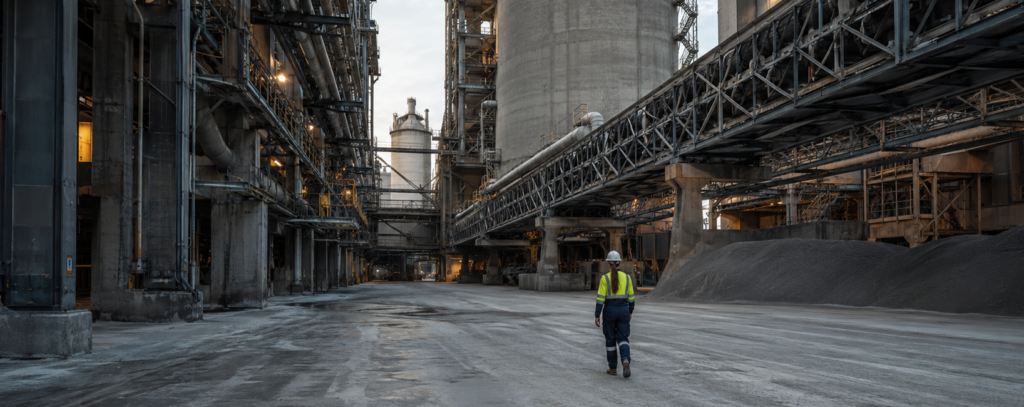
The common first step: Capture, separating CO₂ before it reaches the atmosphere
This is the most intuitive part of the process: pulling CO₂ out of a cement plant’s flue gas before it’s released. The challenge isn’t really capturing it per se, since other industries have known how to do that for decades; it’s doing it at a cost that doesn’t wreck the economics of a plant already running on thin margins.
This is where the sector has moved from promise to real execution in recent years, and two companies from the Cemex Ventures portfolio illustrate two parallel ways of tackling the problem.
Carbon Clean, a UK-based carbon capture company, bets on solving the size problem with its CycloneCC technology: its solution is fully modular, with a footprint up to 10 times smaller than conventional capture systems, and is on track to bring capture costs below $30 per ton of CO₂. Cemex was one of its earliest strategic partners, investing in the company in 2021 and subsequently collaborating on a front-end engineering design (FEED) study for an industrial-scale carbon capture unit at Cemex’s Rüdersdorf plant in 2022. The partnership is now focused on planning the deployment across Cemex’s footprint, as technology is further optimized through prospective pilot campaigns.
KC8 Capture Technologies, an Australian company backed by Cemex Ventures alongside Woodside Energy and SABIC, attacks the same problem from a different angle: a proprietary, non-toxic and non-volatile solvent that captures up to 95% of CO₂ from heavy industrial sources, (e.g. cement, steel, power generation), at a capital cost up to 50% lower than amine-based solutions, and with roughly 15% better energy efficiency. The startup is currently piloting at industrial scale at the National Carbon Capture Center in Alabama (USA), and short-term results will trigger future collaborations with Cemex to further derisk technology and potential business cases.
What matters in both cases isn’t just the technology itself, but the pattern behind it: neither started as a lab promise a manufacturer adopted on faith. Both have advanced through close collaboration with a cement producer, with Cemex actively supporting their development and industrial scale-up. That, ultimately, is what can make the difference between a capture technology that remains a technical concept and one that has a credible path to commercial deployment.”
And cost remains the variable that decides everything. For years, the reference price the industry has chased is getting below $30–40 per ton of CO₂ captured, the threshold at which the technology stops being a subsidized sustainability project and starts making economic sense on its own. Both Carbon Clean and KC8 have built their value proposition explicitly around that number, which explains why both have pulled off something rare in climate tech: getting a cement producer to offer up its own plant as a testing ground, rather than waiting for the technology to mature somewhere else first.
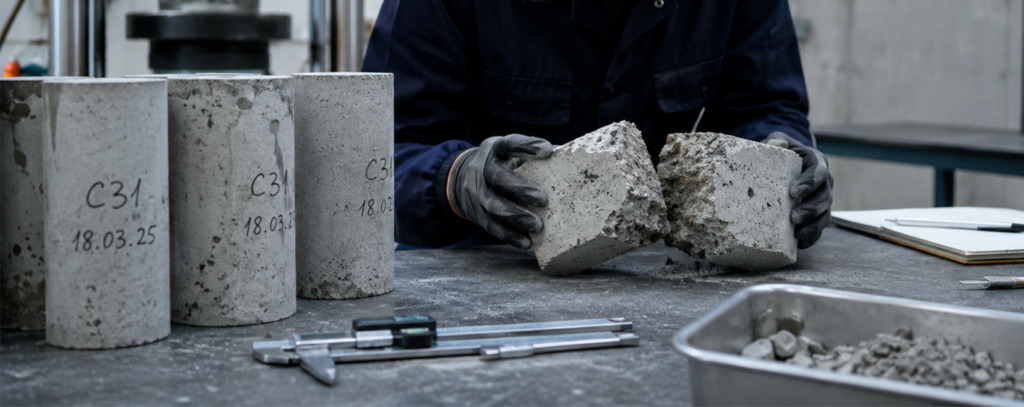
Pathway 1: Utilization, turning captured CO₂ into part of the material
The first pathway after capture uses CO₂ as an input to produce lower-carbon derivatives (like construction materials). Through mineralization, CO₂ reacts with calcium- or magnesium-rich materials and is converted into stable mineral forms, effectively locking the carbon into the material itself. Carbon Upcycling is a sound example of this approach. Its technology uses CO₂ to transform industrial waste streams and other mineral materials into higher-performing cement additives, helping reduce the clinker content—and therefore the embodied carbon—of cement. Rather than treating CO₂ solely as a waste stream that needs to be transported and stored, the process turns it into an input for producing construction materials.
Cemex first invested in Carbon Upcycling in 2022, and that same year the two companies began working together to establish the world’s first commercial-scale plant producing cement additives by sequestering CO₂ at Cemex’s Rugby cement plant. The partnership is now focused on exploring new opportunities and feedstocks to scale the technology across multiple Cemex’s operations.
Utilization has one clear advantage over geological storage: it doesn’t require transport or geological storage infrastructure. The CO₂ becomes part of the product itself, potentially avoiding the need for the transport and geological storage infrastructure required by conventional carbon capture and storage. This can simplify the deployment pathway, particularly where the captured CO₂ can be integrated directly into the production of new construction materials.
The challenge, however, is that the scale of CO₂ utilization is ultimately linked to the availability and economics of suitable feedstocks and end markets for the resulting materials. The opportunity is therefore not only to permanently mineralize CO₂, but to do so while producing a commercially valuable product that can displace higher-carbon materials. This creates a fundamentally different deployment model from traditional carbon capture and storage: rather than building an entirely new value chain comprising capture, transport and storage infrastructure, the technology can be integrated into existing materials production and create value from both the CO₂ and the waste material.
Pathway 2: Storage, burying captured CO₂ permanently
The second pathway after capture is the most ambitious from an infrastructure standpoint, and the most recent to reach real industrial-scale operation within the cement sector. It means capturing CO₂, liquefying it, transporting it (usually by ship or pipeline), and storing it permanently in deep geological formations – typically beneath the seabed.
The most significant example in the sector to date is Brevik CCS project in Norway, which opened in 2025 as the first industrial-scale capture facility in the history of the global cement industry. The plant captures around 400,000 tons of CO₂ a year, 50% of the facility’s emissions, which is liquefied and shipped to Northern Lights, where it is temporarily stored before being transported through a. 110-kilometer pipeline and injected approximately 2,600 meters beneath the seabed for permanent storage.
What makes this case particularly significant isn’t just the scale, but the full value chain it represents: plant-level capture, maritime transport, intermediate storage, and finally permanent geological injection, all operating as an integrated system across several specialized companies. It provides an important real-world reference for an industry that had previously relied largely on pilot projects, feasibility studies, and individual components of the value chain.
Of the two post-capture pathways, geological storage is by far the one requiring the most coordination between companies that don’t necessarily compete with each other but have to sync perfectly: the (cement) producer that captures, the shipping company that transports, and the site operator that stores. That complexity is also why, until Brevik, this pathway existed mostly in technical papers and feasibility studies. Northern Lights, for instance, already counts industrial customers from sectors well outside cement, from a waste-to-energy plant in Oslo to a chemical plant in the Netherlands, pointing toward a future model: shared storage infrastructure across industries, rather than each sector building its own from scratch.
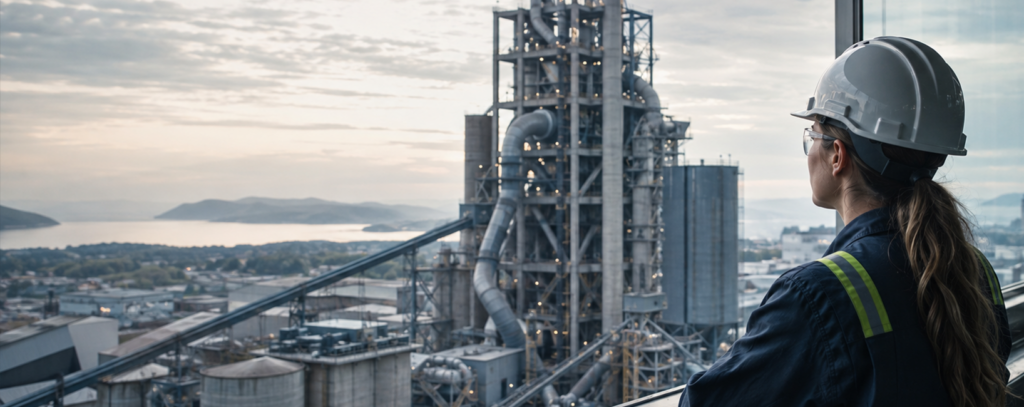
After capture, which pathway is the right one?
Capture is the common first step. After that, utilization and geological storage are two downstream routes whose suitability depends on the plant, scale, geography and available/required infrastructure.
- Utilization (including mineralization) makes sense where no transport or storage infrastructure is available, as it can enable CO₂ to be incorporated directly into new compounds and/or building materials, with far lower investment and operational complexity.
- Geological storage makes sense in regions with access to suitable geological formations and shared transport infrastructure, where multiple industries can split the cost of a transport-and-storage chain that no single plant could justify on its own.
The GCCA estimates that carbon capture, utilization, and storage accounts for 36% of the reduction levers in its 2050 roadmap to net-zero cement, a good indicator of how much weight this family of technologies carries in the overall equation, well ahead of what any single lever, like clinker reduction or the energy transition, can deliver on its own.
Why this matters for investors and for builders
For a cement producer, the choice after capture —utilization or geological storage— is a strategic decision, shaped by plant location, nearby transport infrastructure, available capital and the market for the resulting green(er) cement or concrete.
For investors backing these startups, and this is where a corporate venture capital fund like Cemex Ventures comes in, the read is different: it’s not about betting on a single winning technology, but building a portfolio of complementary solutions that cover the different scenarios a global cement business actually operates in. Carbon Clean and KC8 aren’t really competing so much as each competing against the status quo of capturing nothing at all. And neither competes directly with carbon utilization solutions like Carbon Upcycling, which solve a different problem at a different point in the value chain.
That, ultimately, is the lesson: CCUS is not a choice between mutually exclusive pathways. Capture is the common starting point; utilization and geological storage are the two downstream routes needed to tackle process emissions other decarbonization levers cannot eliminate.